OptiQube vs Creatify

OptiQube vs Creatify: Video ads for a few products, or creatives for your whole catalog?

Both tools make ad creative with AI. Creatify turns a product URL or image into video and image ads with avatars, one product at a time, and syncs them to Meta and TikTok. OptiQube reads your product feed, generates image creatives for every SKU and sends them to Meta as catalog ads.

Start for free

TL;DR

Creatify is an AI video and image ad generator: paste a product URL, pick an avatar and get ad variants, from $15/mo on credits that expire after two months (checked 4 Nov 2026). It has no product-feed connection. OptiQube generates catalog ad creatives for every product in your feed and publishes them to Meta as a paused campaign draft, from $29/mo. Video and a few hero products fit Creatify; a catalog on Meta fits OptiQube.

At a glance

Quick comparison

If you only have 30 seconds, this table covers the essentials.

OptiQube compared with Creatify across pricing, credits, catalog connection and features (Creatify figures checked 4 Nov 2026)
AspectOptiQubeCreatify
Best forEcommerce brands running Meta catalog ads for 50–5,000 SKUs, no designerBrands, apps and agencies that need video and UGC-style ads for a few products or offers
Starting price$29/mo ($25 billed annually)$15/mo Standard ($10/mo billed annually); free plan with watermark
Pricing modelMonthly credits spent on generation; 3,000 credits on StarterMonthly credits spent per generation; cost varies by AI model; 55 credits on Standard; credits expire after 2 months
Free trial1,000 credits for 30 days; generate and preview, upgrade to publish; no cardFree plan: 10 credits a month, watermarked exports; no card
Catalog / feed connectionMeta catalog, XML feed, Shopify, WooCommerce, Unas, Shoprenter; prices and stock stay in sync— No product-feed or catalog connection; ads are made from a product URL, an image or a collection-page link
Gets ads live on MetaApproved creatives land in a Meta campaign draft, paused until you activate itSyncs ads and results with Meta and TikTok ad accounts; no catalog publishing
Creative generationAI lifestyle, badge, callout and mixed image creatives for every SKU, drafted as four directions in about a minuteURL-to-video, product videos, image ads and AI avatar (UGC-style) ads; batch mode makes variants by hook, avatar, ratio and language
BrandBrand DNA read from your store: colors, fonts, tone, language; editableBrand spaces with logo, colors and fonts: 1 / 2 / 3 / 10 by plan
VideoComing soonCore product: avatar, product and AI-model videos on every plan
Competitor research—Competitor Ad Tracker and Ad Clone from the Pro plan ($55/mo)
Agency planAgency S/M/L from $279/mo with sub-accounts and per-client creditsBusiness plan from $195/mo: 10 seats, 10 brand spaces, unlimited ad-account connections
ChannelsMeta (Facebook/Instagram)Meta and TikTok ad-account sync; Google, Snapchat and Reddit connections listed for media buyers
Self-serviceYesYes

Category winners

  • Catalog scale and feed syncOptiQube
  • Getting catalog creatives live on Meta, matched to product IDsOptiQube
  • Creative for every product without per-product workOptiQube
  • Video and avatar (UGC-style) adsCreatify
  • Price per single image adCreatify
  • Competitor ad research and multi-platform syncCreatify
What's the difference?

Short summary

Creatify

Creatify is an AI ad generator built around video: you paste a product URL or upload images, pick an AI avatar and a hook, and it returns video and image ad variants it can sync to your Meta and TikTok ad accounts. From the $55/mo Pro plan it adds a Competitor Ad Tracker, Ad Clone and an Ad Agent that ranks your creatives by CTR, ROAS and CPA. It works one product at a time, or one collection page at a time in batch mode, and has no product-feed connection, so it suits a brand with a few hero products and a video-first media plan.

OptiQube

OptiQube is built for one job, catalog ads on Meta: connect your product feed, describe the ads you want, and the agent reads your brand, drafts four directions in about a minute and generates image creatives for every product. Approved creatives land in a Meta campaign draft that goes up paused, and prices, stock and new products stay in sync with the feed. Clickbrains, the PPC agency behind Delifarm, used it to replace white-background product shots in an 11-day test and reported 34× ROAS and 42% more purchases on Meta.

Read the Delifarm case study →
Who is each tool for?

Video for a few products vs images for a whole catalog

Which team fits OptiQube and which fits Creatify
AspectGood fit for OptiQubeGood fit for Creatify
What you advertiseA product catalog with dozens to thousands of SKUsA few hero products, an app, a service or an offer, one campaign at a time
Formats you need todaySquare, portrait and story images for catalog adsVertical video, avatar and UGC-style ads, plus image ads
ChannelsMeta (Facebook/Instagram)Meta and TikTok, with Google, Snapchat and Reddit connections for reporting
TeamSolo marketer or small team without a designer, or a PPC agency running client storesMedia buyer or creative team that tests many hooks and avatars and wants its own ROAS ranking
Creative volumeNew creative for every SKU, refreshed each seasonTens to hundreds of variants of a few ads a month, by plan and credit tier
Core pain point“Our catalog ads are white-background product shots and we have nobody to redesign 800 of them.”“We need twenty video hooks for this product by Friday and no one to film them.”
Agency relationshipAgency S/M/L plans with sub-accounts and per-client creditsBusiness plan with 10 seats, 10 brand spaces and unlimited ad-account connections

If your creative volume is set by the number of products you sell, and those ads run on Meta, OptiQube does the work per catalog and keeps it in sync with the feed. If you sell a few products and your media plan runs on vertical video with avatars, across Meta and TikTok, Creatify is built for that and OptiQube is not.

Pricing

OptiQube vs Creatify pricing in 2026

Plan-by-plan pricing, OptiQube vs Creatify. Creatify figures from creatify.ai/pricing on 4 Nov 2026, monthly billing; annual billing is 30% off. Creatify’s Max plan ($95/mo, 730 credits) sits between Pro and Business.
AspectOptiQubeStarterOptiQubeProCreatifyFreeCreatifyStandardCreatifyProCreatifyBusiness
Price$29/mo ($25 billed annually)$189/mo ($160 billed annually)$0$15/mo ($10/mo billed annually)$55/mo ($38/mo billed annually)From $195/mo ($136/mo billed annually)
Best forOne storeLarger catalog, up to 6 connected feedsTrying the tool; exports carry a watermarkOne person making a few ads a monthA marketer testing hooks, avatars and competitor adsTeam or agency with several brands and ad accounts
Brands / feeds / users1 connected product feed6 connected product feeds1 brand space1 brand space, 1 seat2 brand spaces, 1 seat10 brand spaces, 10 seats
Monthly allowance3,000 credits for generation25,000 credits for generation10 credits (about 2 video ads or 20 image ads)55 credits (about 220 image ads or 7 short AI-model videos)280 credits (about 1,120 image ads or 36 short AI-model videos)1,500 credits (higher tiers available)
What spends itGenerating creatives (about 44 credits per image on average)SameEach generation; cost depends on the AI model and is shown before you confirmSameSameSame
Credit expiryMonthly allowance; top-ups valid 12 monthsUnused credits roll over for 90 daysCredits expire after 2 monthsCredits expire after 2 monthsCredits expire after 2 monthsCredits expire after 2 months
VideoComing soonComing soonWatermarkedYesYesYes
Free trial1,000 credits, 30 days, no card1,000 credits, 30 days, no cardThe free plan is the trial; no card———
Extra capacity+5,000 credits for $49, valid 12 months+5,000 credits for $49, 10% off—Credit packs (price not listed)Credit packs (price not listed)3,050 and 6,100-credit tiers; API plans $99 and $299/mo

Creatify prices checked on

On a per-file basis Creatify is cheaper: by its own yield figures Standard works out at roughly $0.07 per image ad against about $0.43 per image on OptiQube Starter. What the OptiQube credit buys is different work: a creative generated from the feed for every product, matched to its product ID, with price and stock kept in sync and a Meta campaign draft at the end. On Creatify, the per-product work and the catalog matching stay with you.

Here is the catalog math for a store with 200 products that wants a square and a portrait creative for each: 400 images. On Creatify that is 400 separate generations from 200 product links, well within Pro’s 280 credits if every image costs a quarter of a credit, but each one is a manual job and none of them is tied to a catalog item. On OptiQube, Pro at $189/mo (25,000 credits) covers about 568 images at the 44-credit average, generated from the feed in one run and refreshed for the next season with one new prompt.

The figures on this page are what creatify.ai/pricing displayed on 4 Nov 2026: Free, Standard $15, Pro $55, Max $95 and Business from $195 a month, with annual billing 30% off. Creatify changed its plan names and prices twice in October 2026, so articles quoting a $39 Starter or a $99 Pro are out of date; check the live page before you buy. Creatify’s help center also states that payments are final and non-refundable.

Neither tool charges a percentage of ad spend. Creatify’s API is a separate subscription ($99 or $299 a month) and its Business tier is priced by credit volume; OptiQube’s Agency S/M/L plans ($279/$399/$599 a month) add sub-accounts and a separate credit pool per client.

See all OptiQube plans →
Feature by feature

Where each tool actually wins

Six places where the two products genuinely differ, and an honest read on who comes out ahead in each.

One product at a time, or the whole catalog

The single biggest difference is what one “job” means in each tool.

In Creatify a job is one product: you paste its URL or upload its images, pick a hook, an avatar and a format, and generate. Batch mode multiplies that into variants, and a collection-page link gives you one ad per product on that page, but every ad is still a standalone file with no link to a catalog item.

In OptiQube a job is the catalog. The agent reads the feed, applies your Brand DNA and generates creatives for every product in one run, including new products that arrive later. Seasonal refreshes work the same way: describe “Black Friday badge ads for the whole catalog, 30% off” once.

Winner: OptiQube. If the number of products sets your creative volume, per-catalog generation is the only model that does not turn into a part-time job.

Product feed vs product link

Both tools start from your product data. They read different amounts of it.

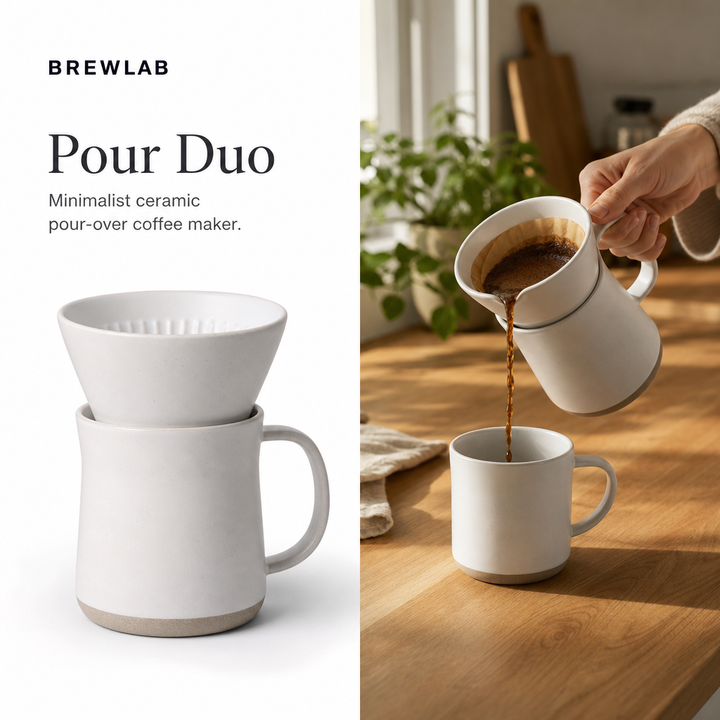
Creatify reads a product page: title, images and description become the script and the visuals. It does not connect to a Meta catalog, an XML feed or a Shopify product feed, so prices, stock and new SKUs are not part of the workflow, and the segments on its site are ecommerce, apps, games and lead generation alike.

OptiQube connects to Meta catalogs, XML feeds, Shopify, WooCommerce, Unas and Shoprenter. Because the creative is generated from the feed, each image carries the right product, the right price and the right availability, and a product that sells out drops out of the ad set with it.

Winner: OptiQube. Catalog ads live or die on the feed. A tool that never reads it cannot keep 500 creatives correct.

Getting the ads live on Meta

A finished creative on your desktop is not a running ad.

Approved OptiQube creatives land in a Meta campaign draft. It goes up paused, so nothing spends until you activate it. The creatives stay matched to the right product IDs because they came from the feed.

Creatify syncs with your Meta and TikTok ad accounts and its Ad Agent reads results back to rank creatives by CTR, ROAS and CPA. That is a real advantage for single ads. For catalog ads it does not help: there is no catalog connection, so matching creatives to products is a step outside the tool.

Winner: OptiQube. For catalog ads the creative has to be tied to the product ID at the source. For single video ads, Creatify’s two-platform sync and performance ranking is the better workflow.

Video and avatar ads

Motion and talking heads vs still images, and what ships today.

Video is Creatify’s core product: URL-to-video, product videos, image-to-video with AI models such as Seedance, Veo and Kling on Pro and Max, and 300 to 1,500 AI avatars for UGC-style ads, in 29 languages. If vertical video with a presenter is a requirement this quarter, it is the tool that already has it.

OptiQube generates image creatives only: square, portrait and story sizes. Video is on the roadmap and not available today.

Winner: Creatify. If you need video or avatar ads now, not in a future release, Creatify delivers them on every plan, including the free one.

Credits that roll over vs credits that expire

Both tools use credits. The rules around them differ.

Creatify charges per generation and the cost depends on the AI model, shown before you confirm; a failed or rejected generation still costs credits, which is the most common complaint in its 2026 reviews. Credits expire after two months, annual plans cannot be left until fewer than 10 credits remain, and payments are non-refundable by policy.

OptiQube charges credits when the agent generates, about 44 per image on average. Unused credits roll over for 60 days on Growth and 90 on Pro, and top-ups ($49 for 5,000) stay valid for 12 months. You pay for what you make, and you do not lose what you have not used yet.

Winner: OptiQube. Per-file, Creatify is cheaper. Per rule set, OptiQube is more forgiving: longer rollover, top-ups that keep, and no two-month expiry.

Competitor research and multi-platform coverage

One tool for research, creation and reporting across platforms, or depth on the channel that carries the spend?

From the Pro plan Creatify tracks competitors’ ads, clones a winning ad onto your product and ranks your own creatives by performance across Meta and TikTok, with Google, Snapchat and Reddit connections for media buyers. For a brand that runs the same offer on several platforms, that saves repeated work.

OptiQube is Meta only, on purpose. Catalog ads on Meta have their own creative rules, formats and publishing flow, and the product puts all of its effort there. It does not track competitors’ ads.

Winner: Creatify. If your spend is spread across platforms and you want research built in, Creatify has it. If most of it is Meta catalog ads, breadth buys you little.

Reviews

What Creatify reviews say

The praise is consistent: speed and ease of use, realistic avatars, ad cloning that works and responsive support. Creatify holds 4.8/5 on G2 from about 1,500 reviews, and its own blog reported a G2 Summer 2026 Leader badge from 1,511 reviews in June 2026. Alternative roundups from Segwise (October 2026), Higgsfield (October 2026) and Wireflow (July 2026) all rate it the most complete AI video ad tool for small teams.

The criticism is consistent too: on Trustpilot it rates 3.7/5 from 843 reviews, 18% of them one-star, and the 2026 reviews repeat four themes: charges and cancellations with no refund (which matches Creatify’s own no-refund policy), credits burned on failed or rejected generations, the two-month credit expiry, and output that changes faces, voices or footage between takes. The roundups add the free-tier watermark and chat-only support.

Two things to weigh: every one of those roundups is written by a competing vendor, and so is this page. Creatify does not reply to its negative Trustpilot reviews. Read the reviews yourself before you decide; the links are below.

Examples

Catalog ad examples made with OptiQube

Six creatives from the OptiQube ad library, each generated from a product feed: lifestyle scenes, badges, feature callouts and mixed layouts. Open one to see why it works, or browse the full library by style, industry and season.

Decision guide

When to choose Creatify, when to choose OptiQube

Choose Creatify if:

  • You sell a few hero products, an app or a service, and your ads are vertical video with a presenter, not a catalog.
  • You need video and avatar (UGC-style) ads today, in several languages, and the $15–$95 self-serve plans fit the budget.
  • You run Meta and TikTok together and want competitor tracking, ad cloning and a performance ranking in the same tool.
  • You are a media buyer who tests twenty hooks a week and wants the tool to tell you which one won.

Choose OptiQube if:

  • Your creative volume is set by your product count: hundreds or thousands of SKUs that all need better-than-white-background creative on Meta.
  • You want the creatives generated from the feed and sent to Meta as a paused campaign draft, with product IDs already matched.
  • You have no designer and no time to run a per-product workflow 300 times a season.
  • You are a PPC agency running client stores and want sub-accounts and per-client credits from $279/mo.
Alternatives

Is OptiQube a Creatify alternative? And four others worth a look

Yes, if what you need is catalog ad creative on Meta: OptiQube replaces the per-product workflow with per-catalog generation and publishing. No, if you need video or avatar ads today, or run creative across Meta and TikTok. OptiQube is our product, so here are four other Creatify alternatives, each with the case where it is the better pick.

  • AdCreative.ai

    From $39/mo, credits per download

    Teams making single static ads and variants for Meta, Google, LinkedIn and Pinterest, with creative scoring on the Professional plan.

    See OptiQube vs AdCreative.ai →
  • Zeely

    From $29.95/mo, plus a fee of up to 12% of ad spend

    Solo sellers on Shopify, Etsy or Amazon who want UGC-style video, static ads and organic posts from a mobile app, with one-tap Meta campaign launch.

    See OptiQube vs Zeely →
  • Marpipe

    From $199/mo

    Larger direct-to-consumer brands that want product-feed ads with multivariate testing across Meta, Google, TikTok and more.

    See OptiQube vs Marpipe →
  • Pencil

    Core $14/mo ($11 billed annually, 50 generations), Growth $55/mo, Pro custom

    Teams that want AI video ads with performance prediction; self-serve on Core and Growth, demo-led on Pro.

FAQ

OptiQube vs Creatify, answered

On 4 Nov 2026 creatify.ai listed a free plan (10 credits a month, watermarked), Standard at $15/mo ($10 billed annually, 55 credits), Pro at $55/mo ($38, 280 credits), Max at $95/mo ($66, 730 credits) and Business from $195/mo ($136, 1,500 credits), plus a custom Enterprise plan and separate API plans at $99 and $299/mo. Annual billing is 30% off. Creatify changed these plans twice in October 2026, so check the live page before you subscribe.

Yes. The free plan gives 10 credits a month, about 2 video ads or 20 image ads, and every export carries a watermark; no card is required. OptiQube’s free trial gives you 1,000 credits for 30 days to generate and preview creatives from one product feed, with no watermark; you pick a paid plan when you want to publish to Meta.

A credit is spent on each generation, and the cost depends on the AI model you pick: by Creatify’s own figures Standard’s 55 credits are about 220 image ads or 7 short AI-model videos. Failed or rejected generations also cost credits, and unused credits expire after two months (checked 4 Nov 2026). In OptiQube a credit is spent on generation, about 44 credits per image on average, and unused credits roll over for 60 or 90 days on Growth and Pro.

For a brand with a few products that needs vertical video and avatar ads fast, across Meta and TikTok, yes: that is what it is built for, and G2 reviewers rate it 4.8/5. For a store whose creative volume is set by its catalog, it is the wrong unit of work: every product is a separate job, there is no feed connection, and nothing keeps 500 creatives matched to prices and stock.

For Meta catalog ads, yes: OptiQube generates image creative for every product from your feed and publishes it to Meta as a paused campaign draft, from $29/mo. It is not an alternative if you need video or avatar ads today, or if you run creative on TikTok; OptiQube is Meta only and video is still on the roadmap.

Not from a feed. Creatify works from a product URL, uploaded images or a collection-page link, and batch mode makes variants of one ad or one ad per product on a page. It has no Meta catalog, XML or Shopify feed connection. OptiQube connects to Meta catalogs, XML feeds, Shopify, WooCommerce, Unas and Shoprenter and generates creatives for every product in the feed.

It syncs with your Meta and TikTok ad accounts to launch single ads and read results back, and lists Google, Snapchat and Reddit connections for reporting. It does not publish catalog ads. OptiQube sends approved catalog creatives to Meta as a paused campaign draft, with each creative already matched to its product ID.

OptiQube starts at $29/mo ($25 billed annually) with 3,000 credits and one connected feed; Growth is $79 and Pro $189 a month. Creatify starts at $15/mo ($10 billed annually) with 55 credits, after a free plan with a watermark. Per image Creatify is cheaper; per catalog, OptiQube does the generation, the product matching and the Meta draft for you.

Ready to try it?

See how much faster and cheaper you can get desire-triggering, AI-generated catalog ad creative for every product you sell.